
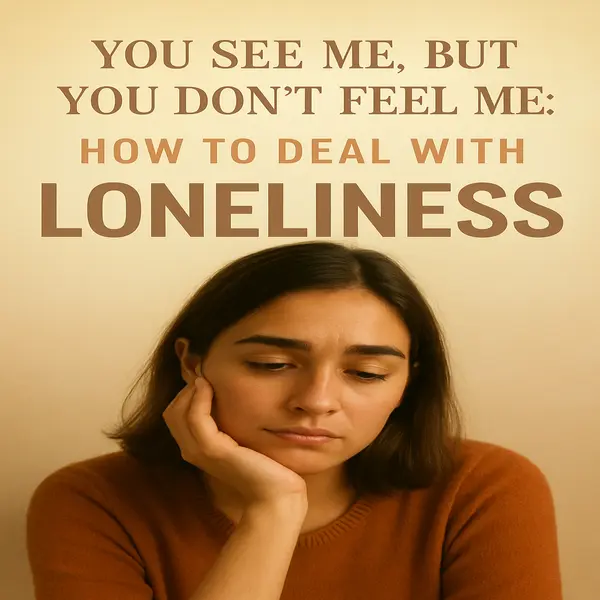
In today’s busy, connected world, many people are silently struggling, and one of the biggest battles is loneliness. It’s not always about being alone. Sometimes, loneliness hides behind smiles, crowded rooms, and busy days. That’s why it’s important to talk about How to Deal With Loneliness —because ignoring it doesn’t make it go away.
My story of loneliness:
I suddenly thought of writing on this topic because the loneliness I’ve been going through for the past two weeks is beyond words. With too much pressure from my work, I completely withdrew from everything. I had even decided to stop writing. Even when I was with others, I didn’t feel like I was with them, because deep down, I believed that the people around me didn’t truly understand me.
Just now, while still sitting with these feelings, I came across the news of the death of a Pakistani model and actress. It had already been seven months since she passed away, and her dead body was lying in her flat, yet none of the neighbors had any idea, and the world didn’t even know—because she used to live alone.
I couldn’t stop thinking about what she must have gone through, how she must have died, and how deeply she must have felt that loneliness. And in that moment, I felt connected to her—because I, too, am going through something similar.
So I thought, why not stand up again? Why not turn my loneliness into words and let them speak for me? Maybe someone out there will read them. Even if it’s just one person.
Loneliness Is Not Just a Feeling
We often confuse loneliness with being physically alone. But it’s much deeper than that. Loneliness is the ache of emotional disconnection. It’s the silent voice inside that says, “No one understands me.” We have to understand it: Loneliness Is Not Just a Feeling. In fact, the one who lives every day while dying inside is the one who dies daily—and then tries to live again in front of others. So we have to learn how to Deal With Loneliness?
Psychologists define loneliness as the gap between the relationships you have and the ones you want. Even someone with hundreds of social media followers can feel profoundly alone if their heart’s not being heard.
A Story That Still Stays With Me
My first meeting with Hina happened in the local van. She also worked in the industrial area, just like me. We used to meet once or twice a week, and over time, these casual meetings turned into something deeper. I got to know her story, and I thanked God a million times for my own life.
She had three sisters and three brothers. Two of her sisters and all her brothers were married. Her marriage had also taken place, but unfortunately, the man turned out to be mentally unstable. Hina couldn’t even spend a full month with him.
She was very young when her parents passed away. Her brothers lived separately with their wives, and she was completely alone. Her house was quite far from the industrial area, and she used to change three local vans just to reach her company.
She would often tell me, “I don’t even have someone to hand me a medicine when I get a fever. I lie in bed for hours with a high temperature, and after struggling a lot, I get up to take the medicine myself. I’m just living somehow. As lonely as I look from the outside, I’m even lonelier on the inside. My siblings don’t have time to see what I’m going through—so how can I expect anyone else to care?”
For just 10,000 rupees a month, she worked so hard—just so she could manage something to eat and drink.
Whenever I looked at the loneliness in her life, I couldn’t help but feel an immense sense of gratitude for my own family.

Hina’s story is not rare. It’s happening all around us—in homes, universities, and offices. That’s why understanding why loneliness happens is the first step to healing.
Why Do We Feel Lonely? The Reasons Behind It
Emotional Disconnect:
Have you ever been in a room full of people—laughing, chatting, celebrating—and yet felt completely out of place, like your heart is living a different reality?
That’s emotional disconnect.
It happens when what you’re feeling inside doesn’t align with what’s happening around you. Everyone might be joyful, but you’re carrying sadness. People might be making memories, but you’re silently enduring pain. You smile out of politeness, nod to keep conversations going, but deep down, you feel invisible.
This disconnect creates an emotional gap between you and the world. It doesn’t matter how many friends you have or how active your life looks from the outside. If no one sees the real you—your struggles, your emotions, your truth—you start to feel alone in company.
And over time, this emotional mismatch can lead to chronic loneliness. You stop trying to explain how you feel because no one truly gets it. You begin to isolate yourself—not physically at first, but emotionally. And that’s where loneliness becomes dangerous. Not loud or dramatic, but quiet, hidden, and painful.
Lack of Deep Conversations:
We talk every day—”How are you?”, “What’s for dinner?”, “Did you see the news?”—but how often do we connect?
Small talk is like a snack: it fills the silence, but it doesn’t nourish the heart. You can have conversations all day and still feel emotionally starved if no one is asking—or answering—answering-the deeper questions:
- What’s been heavy on your heart lately?
- What are you really afraid of these days?
- When was the last time you felt truly seen?
When those deeper conversations are missing, people begin to feel unnoticed. You may be physically surrounded by family, colleagues, or even a loving partner, but still feel emotionally distant if no one understands your inner world.
This is one of the quiet causes of loneliness. People don’t want just company—they want connection. Not just words, but presence, empathy, and space to be real without being judged.
You don’t need a crowd to feel fulfilled. Sometimes, just one honest conversation can do more for the soul than a hundred surface-level exchanges.
My sister always calls me and says, “Talking to you lifts a weight off my heart.” Everyone needs someone like that—someone whose conversation keeps you from slipping into loneliness.
Transitions in Life:
Moving cities, changing jobs, losing someone—these events can make you feel lost and unsettled.
In 2013, my mother decided to leave Karachi and move to Islamabad. That decision was tough for me to accept. Even before the actual move—and long after it—I used to cry alone at night. I didn’t feel comfortable talking to anyone about how I felt.
I was born in that city and completed my education there. Leaving that place felt almost impossible to me. The loneliness I experienced during that time left a wound so deep that now, I don’t even want to go back to that city. I don’t want to walk through those streets again. It’s as if the love I had for that city was suddenly and forcefully taken away from my heart.
When the people or places we love are suddenly taken from us, we often find ourselves walking the path of loneliness.
Walls Around the Heart: A Lonely Kind of Safety.
Many people fear opening up because they’re afraid of being judged, misunderstood, or hurt. So, they put on a brave face, hide their true feelings, and pretend everything is fine.
But this emotional armor creates distance.
When you never let anyone see your real struggles, you also block the chance for a real connection. And that fear of being vulnerable often leads to deep loneliness, because no one can comfort a version of you that doesn’t exist.
Being vulnerable isn’t weakness—it’s the doorway to a genuine relationship
Digital Overload:
We scroll more than we speak, message more than we meet. We spend hours scrolling through social media, watching others’ lives, and replying to messages, but still feel empty. Why? Because online connection can’t replace real human presence. Digital overload makes us feel like we’re “in touch,” but in reality, we’re missing face-to-face conversations and genuine emotional bonds. The more time we invest in screens, the less we invest in relationships, slowly drifting into loneliness without even realizing it.
In my other blog, 7 Life Lessons for Strength: Be Strong Emotionally & Mentally, I have discussed the side effects of digital screens—excessive use can weaken your emotional strength and real-life connections.
The Dangerous Effects of Loneliness on Your Mind and Body
Loneliness isn’t harmless. Studies show it can be as deadly as smoking 15 cigarettes a day. It increases the risk of:
- Depression and anxiety
- High blood pressure
- Weakened immune system
- Poor sleep quality
- Even early death
According to the Centers for Disease Control and Prevention social isolation significantly increases a person’s risk of premature death from all causes.
This is not something to ignore. It deserves our attention.
How to Cope with Loneliness: Actionable Ways to Reconnect
1. Acknowledge It Without Shame
Feeling lonely doesn’t mean something is wrong with you. It happens to almost everyone at some point. Admitting it to yourself is actually brave. It’s the first step toward feeling better.
2. Limit Passive Social Media Use
Spending hours just scrolling makes loneliness worse. Seeing others’ happy moments can make you feel left out. Try using social media to talk to someone instead. Connection matters more than comparison.
3. Build Meaningful Relationships—Slowly
You don’t need a big group to feel connected. Start by opening up to just one person. Even one real conversation can help. Take your time—good friendships grow slowly.
4. Talk to a Counselor or Therapist
Talking to a professional can really help. They listen without judging and guide you through. It doesn’t mean you’re weak—it means you care about yourself. You’re not meant to carry everything alone.
5. Reignite an Old Hobby or Passion
Do something you used to enjoy. Draw, write, cook, plant—anything that makes you feel alive. It gives your mind a break and your heart some joy. Even small creative moments can ease loneliness.
6. Volunteer or Help Someone Else
Helping others shifts your focus from your own pain. It brings meaning to your day and lifts your spirit. Even small acts of kindness make a big difference. You’ll feel a little less alone when you care for others.
Loneliness in the Pakistani Context: A Cultural Silence
In many parts of Pakistan, especially in joint families or conservative settings, people feel they shouldn’t talk about their loneliness. Girls are told, “Shukar karo, sab kuch to hai,” and boys hear, “Strong bano, yeh sab kamzori hai.”
But being emotionally strong doesn’t mean staying silent. We need to break the idea that loneliness is something to hide. Whether you’re a student in Lahore or a mother in Peshawar, your feelings matter.
When to Seek Help: Don’t Wait Too Long
If you’ve been feeling lonely for more than a few weeks, or it’s affecting your sleep, mood, or appetite, it’s time to reach out.
- Talk to someone you trust.
- Reach out to a therapist.
- Join support groups, even online ones.
You can also explore platforms like BetterHelp or local counseling services.
Final Thoughts: Your Loneliness Is Valid, But Not Permanent
If you’ve read this far, it means you’re already searching for light—and that matters. Please know that you are not alone in your loneliness. Thousands feel exactly like you do, but most are too afraid to say it.
Speak. Write. Share. Cry. Laugh. But don’t go silent.
Let’s Start a Conversation
Have you ever felt lonely even when surrounded by people? Share your experience in the comments or message me privately. Your story might give someone else the courage to speak up, too.